
Autism Speech & Communication Therapy
Every child has something to say. Some autistic children talk early and some communicate through gestures, pictures or devices, and some repeat phrases they've heard as a way of connecting. All of it is communication.
At Pediatric Therapy Playhouse, our globally recognized speech therapy for autistic children is neurodiversity affirming and sensory-informed.Our therapists respect how your child thinks, plays and connects. Our goal isn't to change who your child is. It's to help them be understood, express what matters to them, and feel confident communicating at home, at school and in the community.

Our Neurodiversity-Affirming Approach
We believe autistic children learn best when they feel safe, understood and respected. That shapes everything we do in therapy:

We follow your child's interests. Whether it's trains, dinosaurs or a favorite show, we build sessions around what your child already loves.
We value every way of communicating. Speech, signs, pictures, gestures and devices are all real communication. Using AAC does not stop a child from learning to talk
We don't force eye contact or "quiet hands." Stimming and other natural behaviors often help children regulate, focus and feel calm.
We focus on meaningful goals. We work on skills that make daily life easier for your child, such as asking for help, saying no, sharing ideas and connecting with people they care about.
We partner with you. You know your child best. Goals are set together, and we coach you so communication grows between sessions.
Who We Help
We work with autistic children and their families. A formal autism diagnosis is not required to start. Many families come to us while they're on a waitlist for an evaluation, or simply because they've noticed differences in how their child communicates.
Families often reach out when their child:
-
Uses few or no spoken words, or has lost words they used to say
-
Repeats phrases from shows, songs or other people (uses echolalia)
-
Has trouble letting others know what they want, need or feel
-
Becomes very frustrated or overwhelmed when they can't be understood
-
Answers basic questions but finds back-and-forth conversation hard
-
Is in school and needs support with friendships, group work or self-advocacy
If any of this sounds familiar, we're here to help you understand your child's communication and what support might fit.
How We Support Communication
AAC (augmentative and alternative communication)
AAC includes picture boards, sign, and speech-generating devices or apps. We help find the right system for your child, set it up, and teach the whole family how to use it. Research shows AAC supports, rather than replaces, spoken language development.
Gestalt language processing and echolalia
Many autistic children learn language in chunks, such as whole phrases from a song or show, before breaking them into individual words. We recognize these phrases as meaningful communication and help children move toward more flexible, self-generated language.
Expressive and receptive language
We help children understand what others say and build their own words, phrases and sentences to share needs, ideas and feelings.
Social communication
We support skills that matter to your child, like joining play, authentically participating in conversation, and repairing misunderstandings. We respect autistic ways of socializing rather than teaching scripts to look neurotypical
Self-advocacy
We work on speaking up for their needs, such as asking for a break, explaining sensory preferences, or telling a teacher what helps them learn.
Speech clarity and motor planning
Some autistic children also have difficulty planning or producing speech sounds. We assess and support these needs as part of the whole picture.
What to Expect: Evaluation & Therapy
-
Reach out. Call or book online. We'll ask a few questions about your child and send intake forms ahead of time.
-
The evaluation. Your speech-language pathologist plays with your child, observes how they communicate, and uses standardized tools appropriate for their age. Parents are able to stay with their child the whole time.
-
Your results. We explain what we found in plain language, answer your questions, and give you a written report. If therapy isn't needed, we'll share tips and tell you what to watch for.
-
A plan built around your child. If therapy will help, we set clear, practical goals together.
-
Play-based therapy. Sessions are 30 minutes, and most families come twice per week. The visits are designed to feel like play to your child. Toys, books and songs are chosen around your child's interests.
-
Parent coaching. You're the most important person in your child's language development. We show you simple strategies to use during meals, bath time and car rides, so progress continues between visits.
We offer sessions both in our clinic and by telehealth.

Working With Your Child's Team

Communication grows fastest when everyone in your child's life is on the same page. With your permission, we coordinate with:
-
Pediatricians and developmental pediatricians
-
Occupational therapists, especially around sensory and motor needs
-
Teachers, IEP teams and early intervention providers
-
Psychologists and diagnostic teams
We can meet with your child's therapists, share AAC strategies, and help make sure your child's communication system goes everywhere they do, and that the entire team is on board with the plan for targeting communication goals.
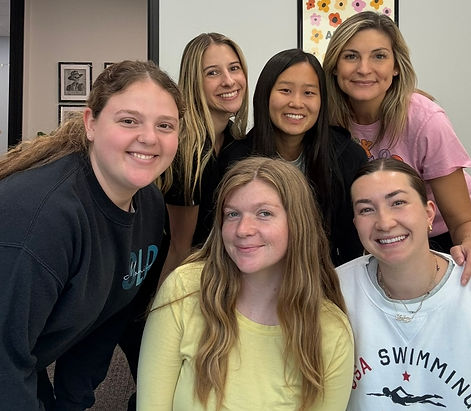
Meet Your Speech-Language Pathologists
Pediatric Therapy Playhouse was founded in 2013 by globally known speech-language pathologist and educator, Jessie Ginsburg, MS, CCC-SLP.
All of our therapists are fully licensed speech-language pathologists who have a high level of training in sensory processing, AAC, gestalt language processing, and neurodiversity affirming therapy for autistic children.
Our clinic attracts therapists from around the US because of our extensive training programs that are known around the world. Joining our team is highly competitive so you can rest assured that you will be working with a skilled, compassionate, and confident therapist.
FAQs
Does my child need an autism diagnosis to start speech therapy?
No. We can evaluate and support your child's communication with or without a diagnosis. If you're seeking a diagnosis, we can share our observations with your diagnostic team and point you toward local resources.
Will using AAC stop my child from talking?
No. Research consistently shows that AAC does not prevent speech and often supports it. AAC gives your child a way to communicate now, which can reduce frustration and help language grow.
My child repeats lines from shows. What does that mean?
Repeating phrases, often called echolalia, is a common and meaningful way many autistic children communicate. It can be a sign of gestalt language processing. We help you understand what those phrases may mean and build on them.
Is speech therapy the same as ABA?
No. Speech therapy is provided by licensed speech-language pathologists and focuses on communication and language.
What age should my child start?
There's no age that's too early or too late. Young children benefit from early support, and older children and teens can build self-advocacy and conversation skills at any point.
How long will my child need therapy?
It depends on your child's goals and needs. We review progress regularly and adjust the plan with you.
Does insurance cover autism speech therapy?
Many plans cover speech-language evaluations and therapy. We accept Anthem Blue Cross, Blue Shield, United Healthcare, and Cedars Sinai HMO plans. We offer self-pay rates of $140/session.